Non-contact temperature
Foundry: aluminum and molten metals
Measure without contact the temperature of aluminum and other molten metals, despite a shiny, oxidized and changing surface.
Backed by measurements See the results
The need
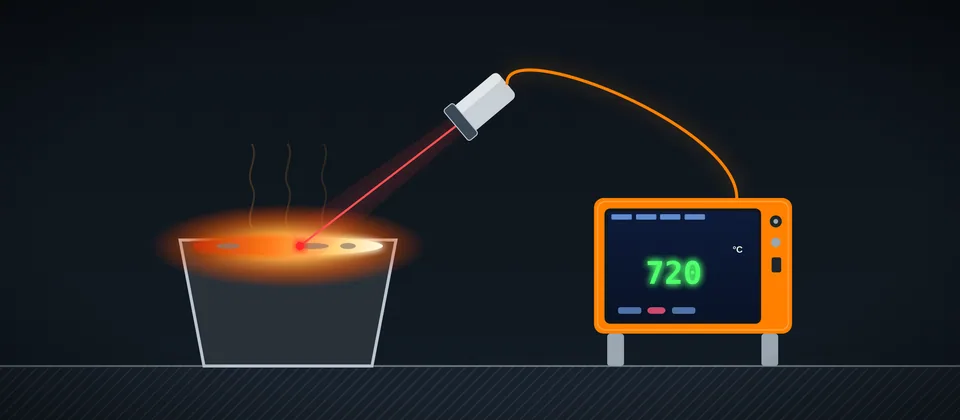
In a foundry, the temperature of the liquid metal governs the quality of the castings. It is measured in the furnace, the ladle or the crucible, at every pour.
Immersion thermocouples wear out and must be replaced, and every measurement means working right next to the liquid metal.
Why conventional sensors fall short
- The surface of a liquid metal is shiny and becomes covered with an oxide skin: its emissivity is low and variable.
- A conventional pyrometer set to a fixed emissivity is wrong as soon as the surface changes.
- The two-color temperature can stay far from reality on these surfaces.
- A thermocouple only measures correctly when it is in good contact with the metal.
What ThermoRef brings
- Non-contact measurement, away from the liquid metal
- Emissivity measured in real time: the measurement follows oxidation and melting
- No emissivity setting by the operator
- 4-20 mA, 0-10 V and Ethernet outputs for supervision
Measurement results
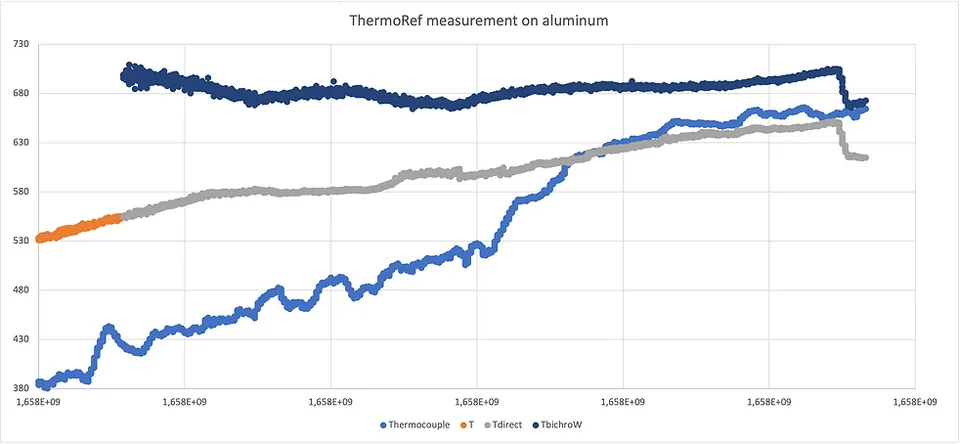
On an aluminum plate heated up to melting, we compared the ThermoRef temperature with a thermocouple and with the two-color temperature.
The two-color temperature stays several tens of degrees higher, while the ThermoRef temperature is the closest to the thermocouple. At first, the difference with the thermocouple comes from its poor contact with the metal; around 580 °C, when the aluminum starts to melt, the thermocouple sinks into it, contact becomes perfect and the two measurements meet.
We also measured molten aluminum in a crucible, above 700 °C.
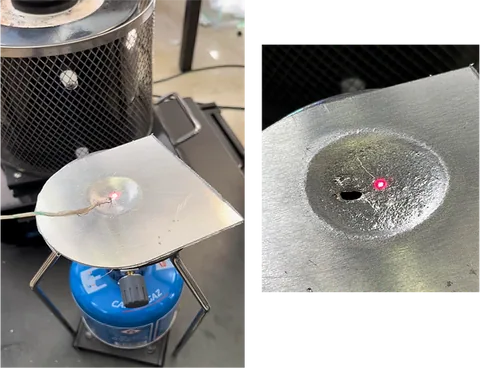
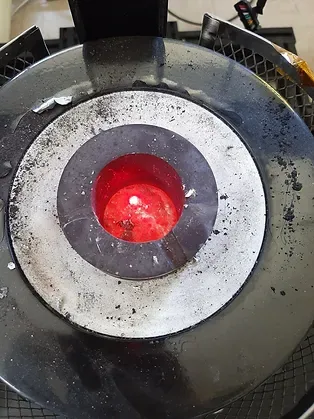
Phonoptics tests.
Implementation
- The optical head aims at the metal surface from outside the furnace or ladle, at the chosen working distance.
- ThermoRef is calibrated on a blackbody for luminance and on a white reference for reflectivity, in the measurement geometry. After that, the operator sets no emissivity.
- The measurement is shown on the screen and sent to supervision through the 4-20 mA, 0-10 V or Ethernet outputs.
- We check the aiming and the distance with you, based on the available opening.
Products used
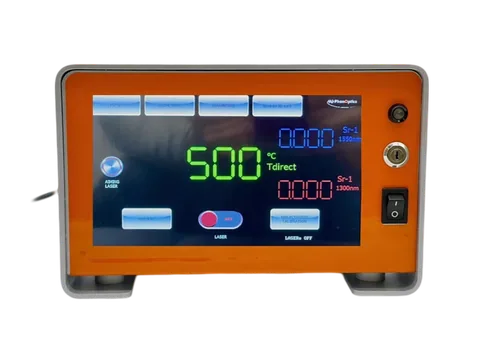
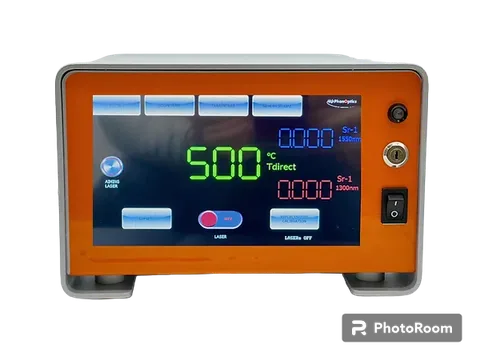
An application close to yours?
Tell us about your installation, the temperature range and what you need to detect: we will propose the right sensor, membrane and conditioner.
Other application cases
-
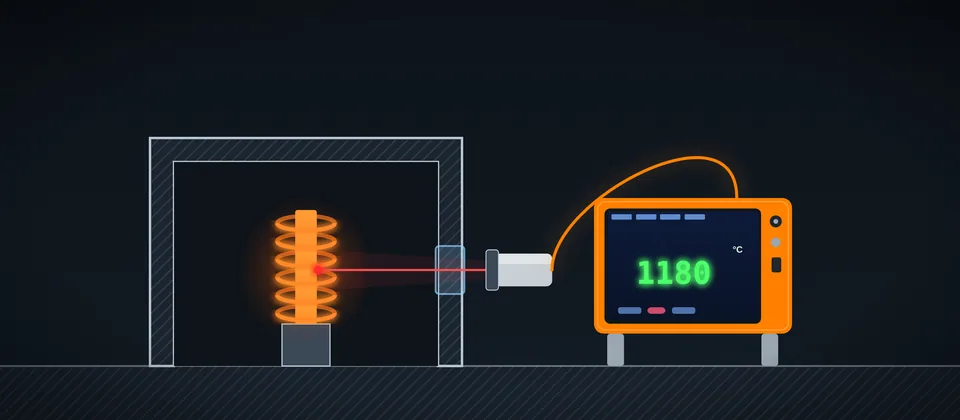 Backed by measurements
Materials R&D: superalloys, ceramics and composites at high temperature
The true temperature of a material whose surface oxidizes or changes during the test, with no emissivity setting. View the case
-
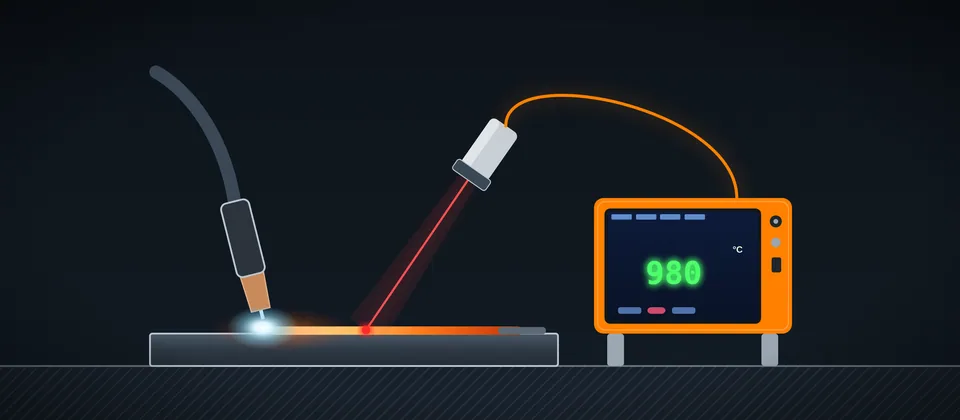 Welding: weld bead temperature
Track the temperature of the weld bead and the surrounding area, without contact and with no emissivity setting. View the case
-
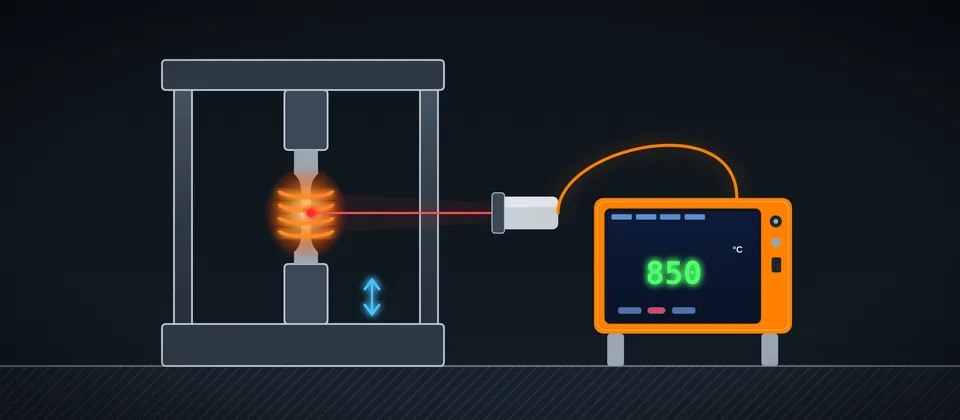 High-temperature fatigue, tensile and ageing tests
Track the temperature of a specimen during a long test, with no thermocouple coming loose and despite oxidation. View the case
-
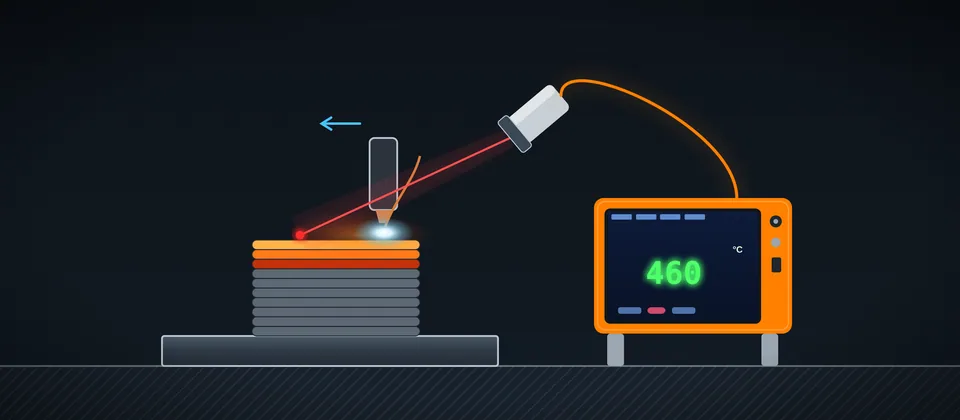 Metal additive manufacturing: layer temperature
Track the temperature of layers and deposits in metal additive manufacturing, on surfaces that change constantly. View the case