Application cases
Non-contact temperature
Welding: weld bead temperature
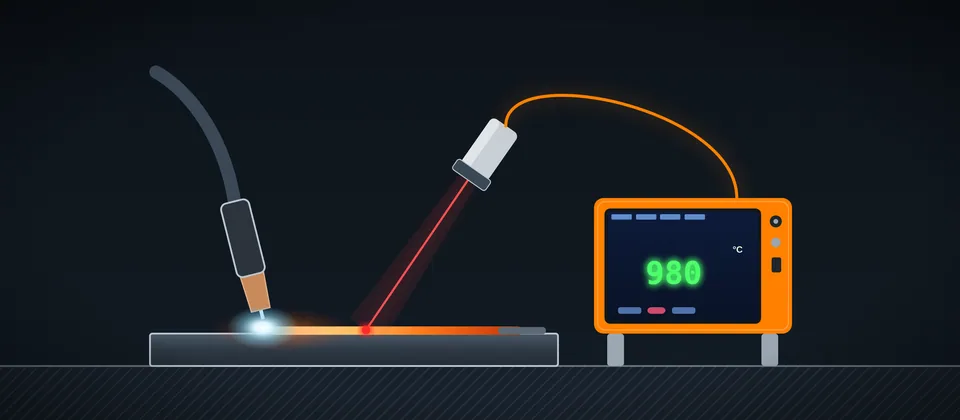
Measure the temperature of the weld bead and the heat-affected zone during and after welding, on a surface that goes from liquid to solid and oxidizes.
An application to study with you: we size the sensor for your installation.
The need
The temperature of the bead and the heat-affected zone during cooling sets the microstructure and residual stresses of the weld. Welding studies and parameter development need to measure it.
It is measured without contact, on a moving part or behind an advancing torch.
Why conventional sensors fall short
- The surface goes from liquid to solid, then oxidizes: its emissivity changes within seconds.
- A pyrometer set to a fixed emissivity gives a wrong temperature as soon as the surface changes.
- A thermocouple welded on the part measures only one point and must be fitted before each test.
What ThermoRef brings
- Emissivity measured in real time at both wavelengths
- Direct temperature with no setting, with fallback temperatures if the surface becomes too dark or too shiny
- Up to 100 measurements per second as an option
- Raw signals available for test analysis
Implementation
- The optical head aims at the bead behind the torch, outside the direct radiation of the arc.
- It follows the torch on the robot or stays fixed above the part.
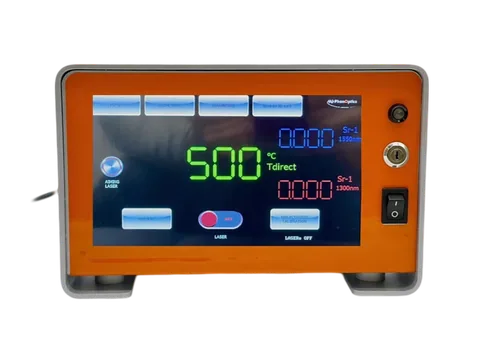
- ThermoRef is calibrated on a blackbody for luminance and on a white reference for reflectivity, in the measurement geometry. After that, the operator sets no emissivity.
- We check with you the spot size relative to the bead width.
Products used
An application close to yours?
Tell us about your installation, the temperature range and what you need to detect: we will propose the right sensor, membrane and conditioner.
Other application cases
-
 Backed by measurements
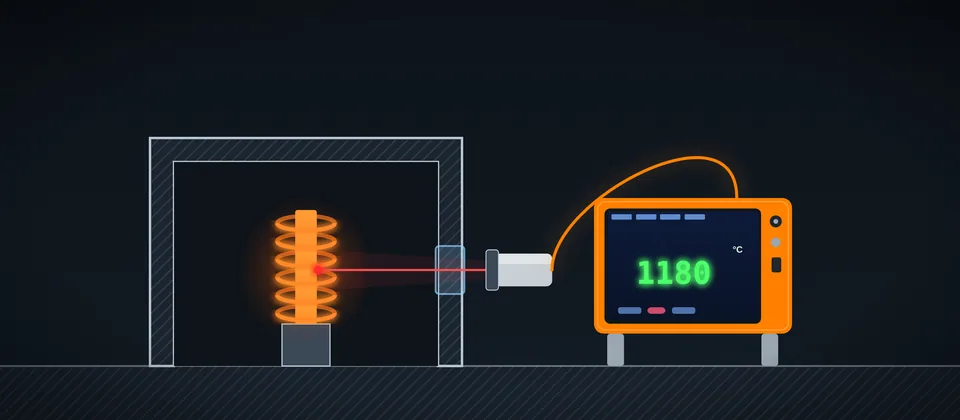
Materials R&D: superalloys, ceramics and composites at high temperature
The true temperature of a material whose surface oxidizes or changes during the test, with no emissivity setting. View the case
-
 Backed by measurements
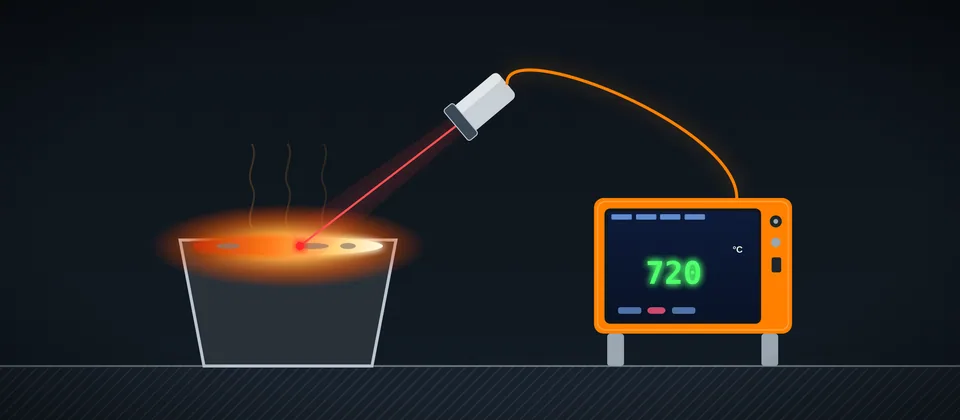
Foundry: aluminum and molten metals
Measure without contact the temperature of a liquid metal whose surface shines and oxidizes. View the case
-
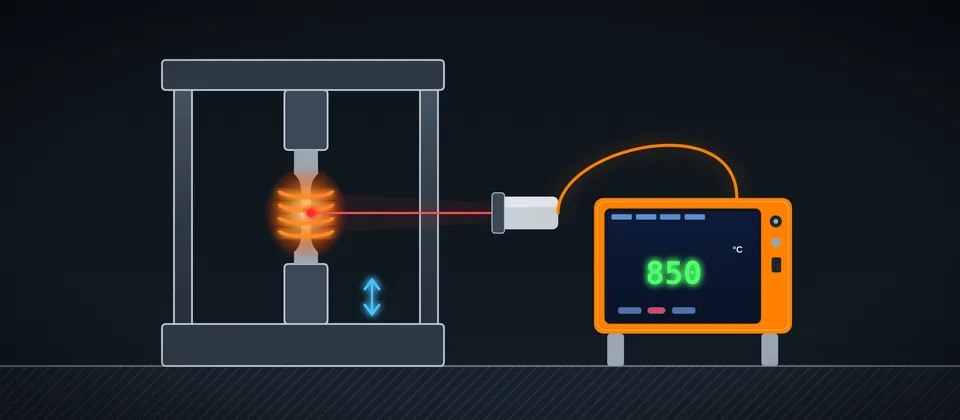 High-temperature fatigue, tensile and ageing tests
Track the temperature of a specimen during a long test, with no thermocouple coming loose and despite oxidation. View the case
-
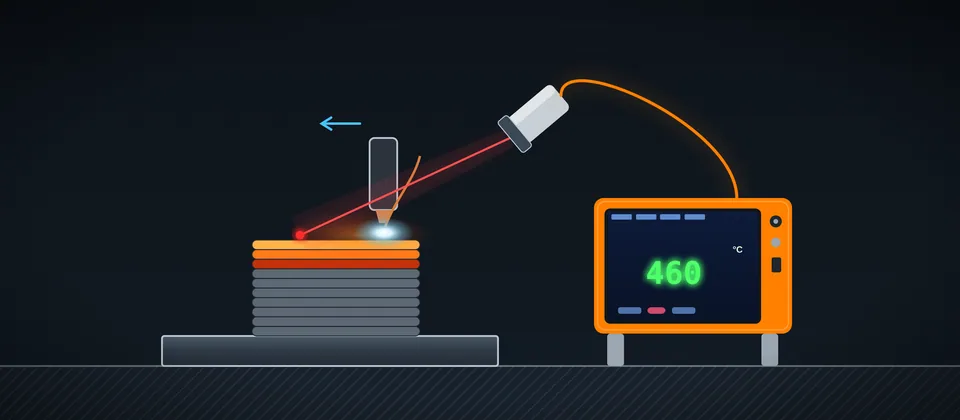 Metal additive manufacturing: layer temperature
Track the temperature of layers and deposits in metal additive manufacturing, on surfaces that change constantly. View the case