Acoustics and dynamic pressure
Ultrasonic cleaning bath testing
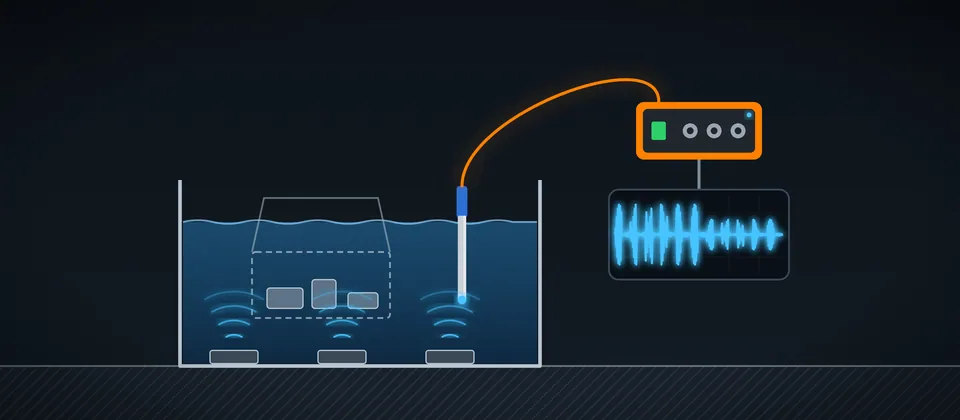
Immerse the sensor in the bath to measure the ultrasonic field the parts actually receive: fundamental frequency, harmonics up to several hundred kHz and homogeneity from one point to another.
Backed by measurements See the results
The need
The efficiency of an ultrasonic cleaning bath depends on the acoustic intensity received at each point. It varies with position, liquid level, load and transducer ageing.
To qualify a bath, compare several tanks or track their drift, you need to measure in the liquid itself, over a wide frequency band.
Why conventional sensors fall short
- Common hydrophones are limited in frequency and miss the higher harmonics.
- An immersed electrical sensor must be perfectly sealed and insulated.
- Indirect methods (aluminum foil, power consumption) do not give the acoustic level at a given point.
What fiber optics brings
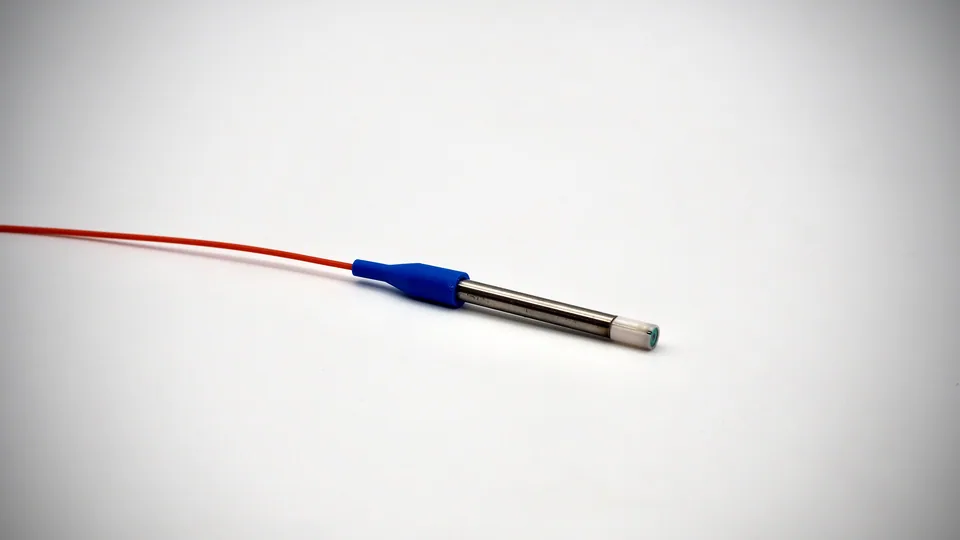
- Miniature sensing head with no electronics, immersed directly in the liquid with a suitable membrane
- Conditioner bandwidth up to 3 MHz: fundamental and harmonics up to several hundred kHz
- Small size: point-by-point measurement to map the bath
- Galvanic isolation between the bath and the acquisition system
Measurement results
The sensor was immersed at two different positions in an ultrasonic cleaning bath, with acquisition sampled at 1 MHz.
The signal shows the periodic bursts of the transducer, with a clear amplitude difference between the two positions: it reflects the local pressure field in the bath. The spectrum reveals the fundamental frequency and a series of harmonics up to several hundred kHz, beyond what common hydrophones can see.
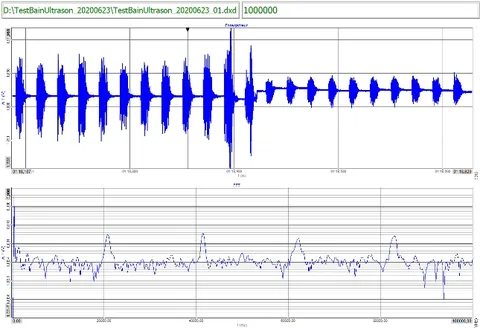
Phonoptics measurements, from the Evotis and Alpheus white paper.
Implementation
- The Alpheus sensor, fitted with a membrane suited to the liquid, is immersed in the bath at the point to measure.
- Moving the sensor from one point to another maps the homogeneity of the bath.
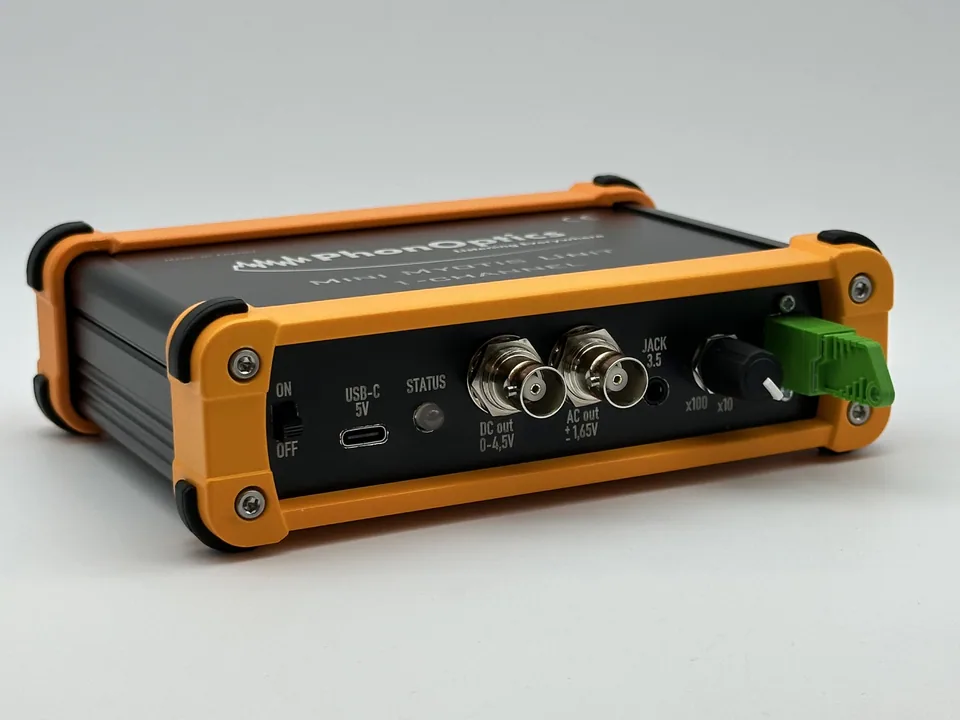
- The MiniMyotis conditioner, outside the bath, delivers the signal on an analog output, to record with an oscilloscope or a fast acquisition system (1 MHz or more).
- Repeated measurements over time track transducer ageing.
Products used
An application close to yours?
Tell us about your installation, the temperature range and what you need to detect: we will propose the right sensor, membrane and conditioner.
Other application cases
-
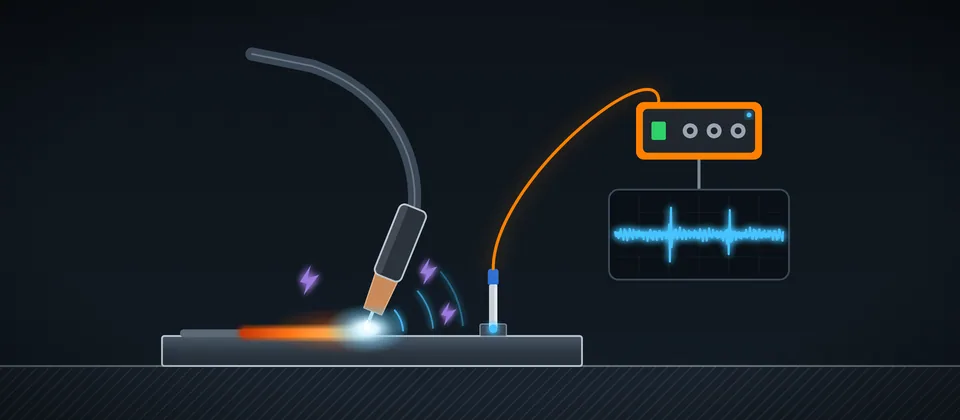 Backed by measurements
Weld monitoring: porosity and wire-stuck detection
Detect porosity and wire sticking live in TIG welding, right next to the arc, free from electromagnetic interference. View the case
-
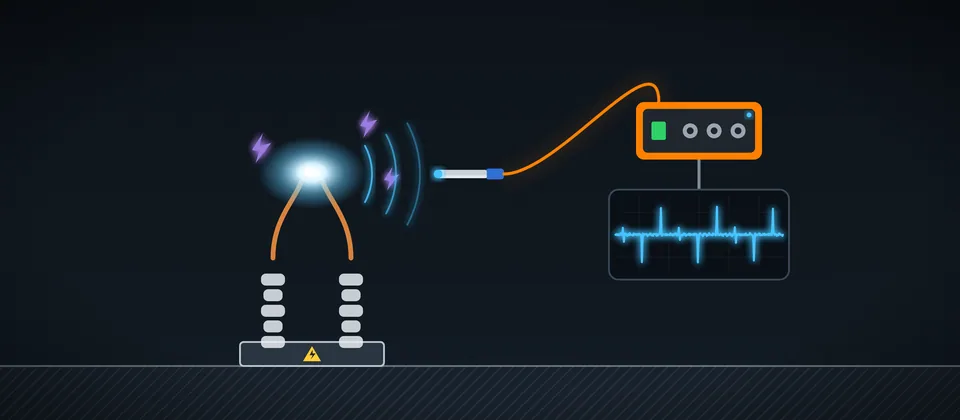 Backed by measurements
Electric arcs and predictive maintenance
Characterize the sound of an electric arc and detect equipment drift, with a sensor the arc cannot disturb. View the case
-
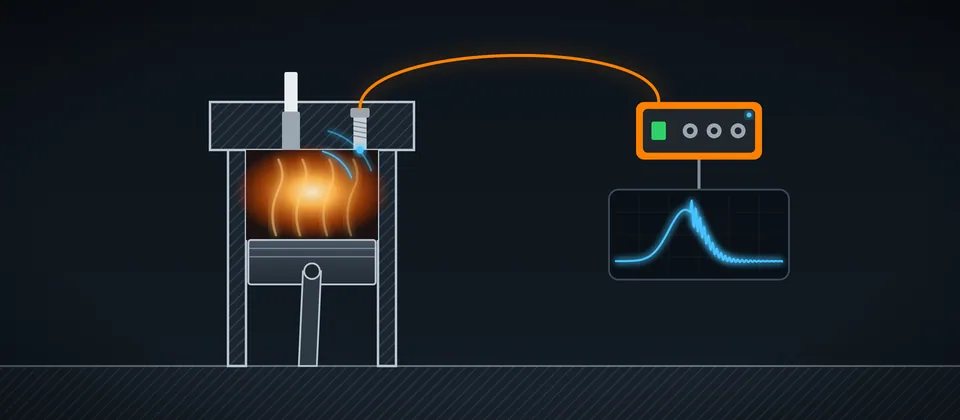 Combustion: instabilities, knock and exhaust
Measure dynamic pressure right next to the combustion, without cooling, up to 850 °C. View the case
-
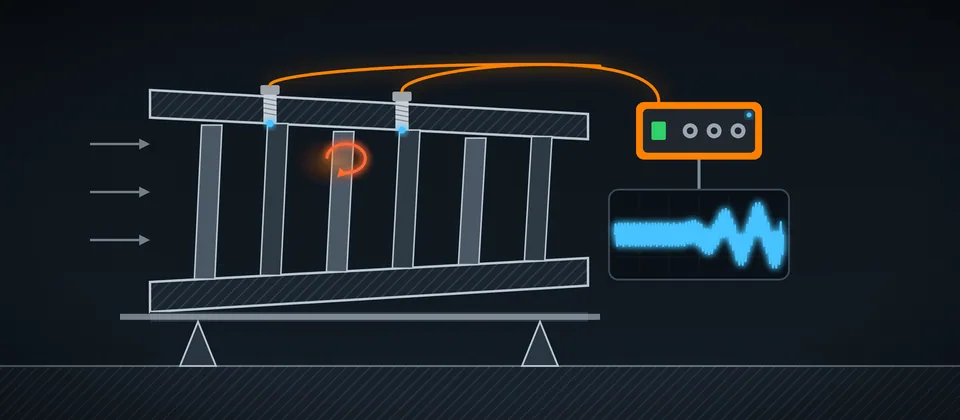 Preventing stall in turbochargers and gas turbines
Spot the precursors of rotating stall and surge from the dynamic pressure measured in the casing. View the case